|
1
|
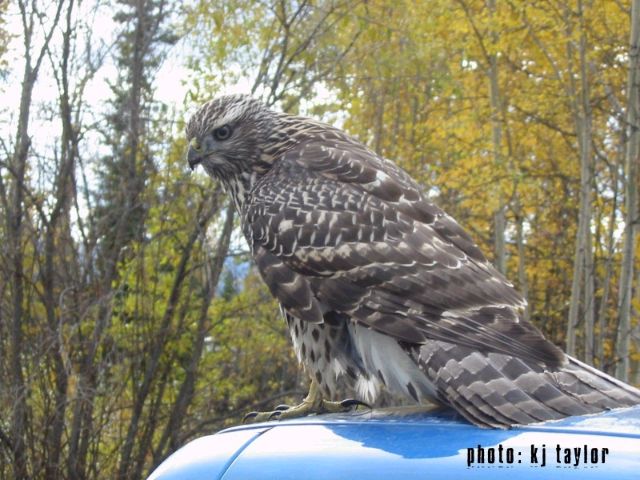
- An Immature Raptor ID Challenge
- Connie Goldman
|
|
2
|
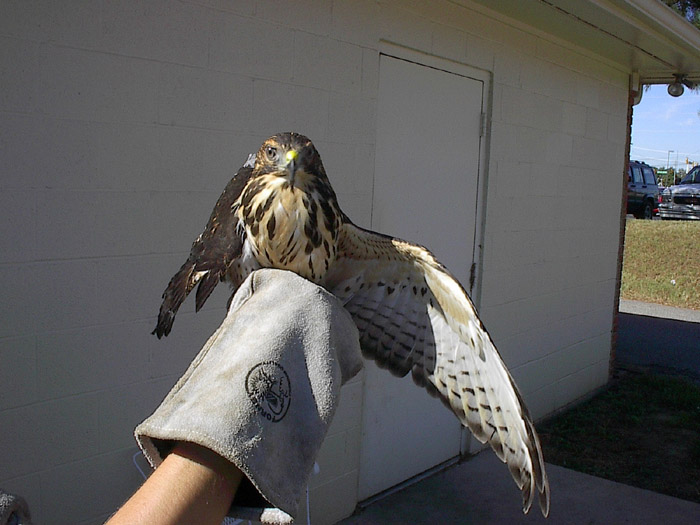
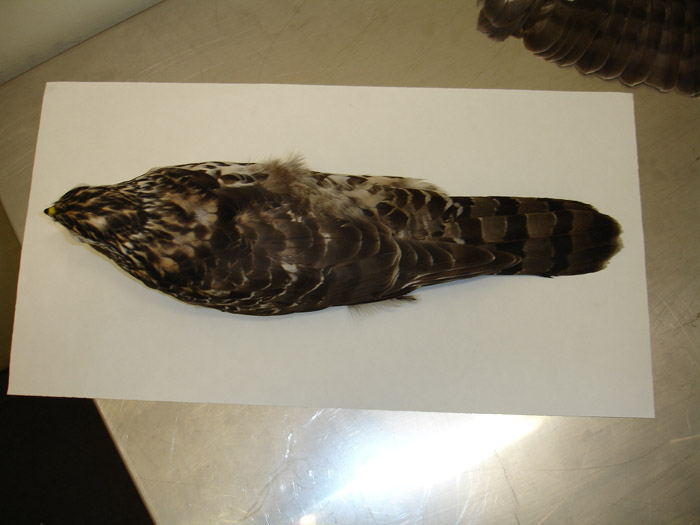
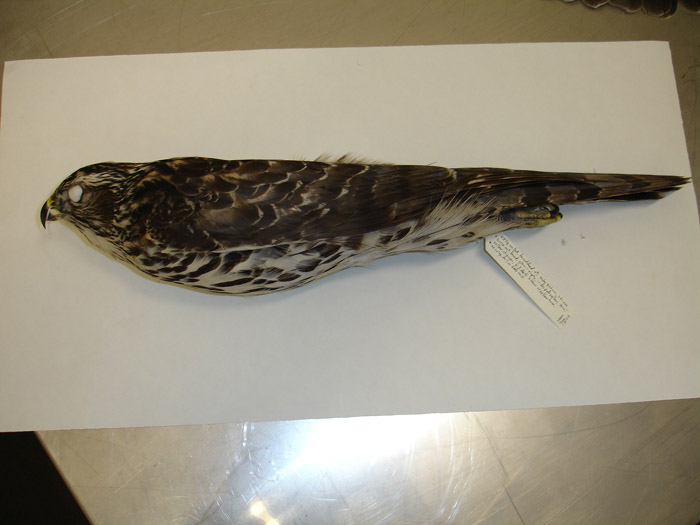
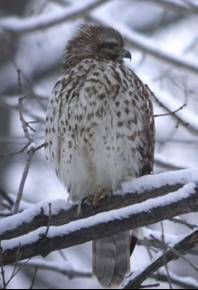
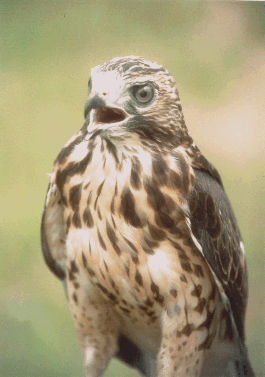
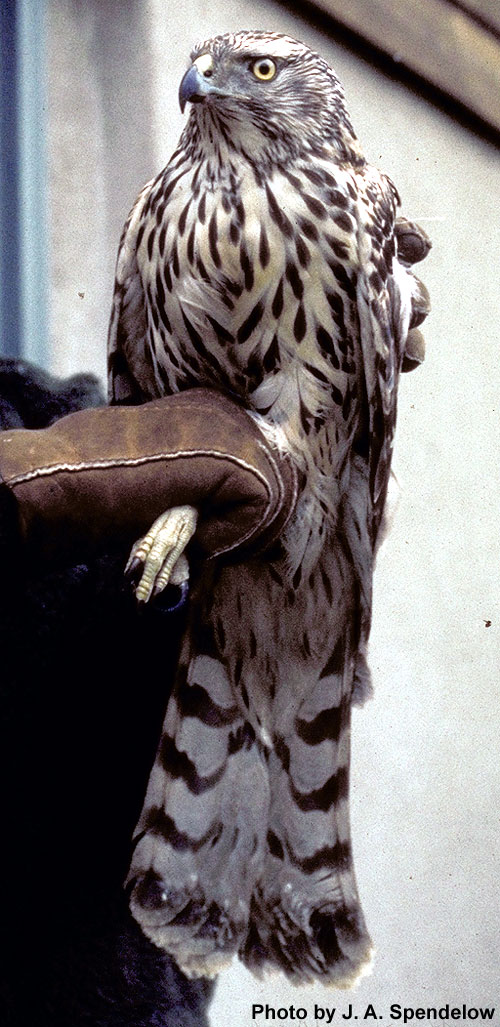
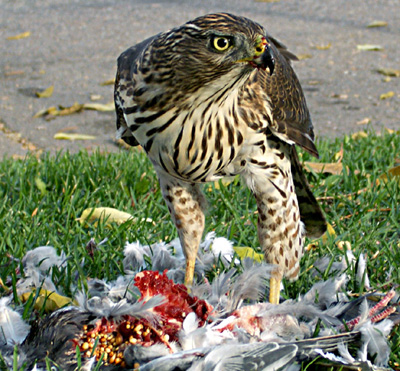
- A raptor was received at ACNATSCI for addition to the collection
- Had been found dead in Cape May New Jersey in November
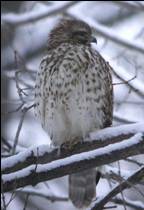
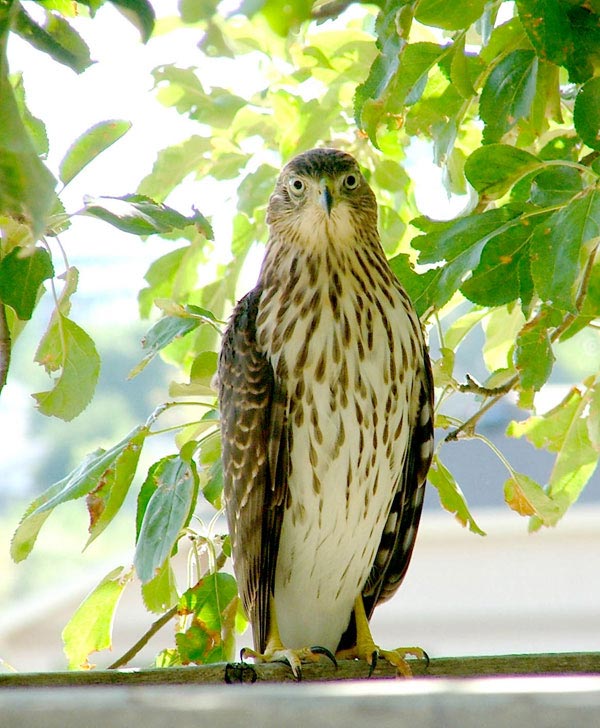
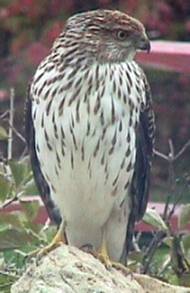
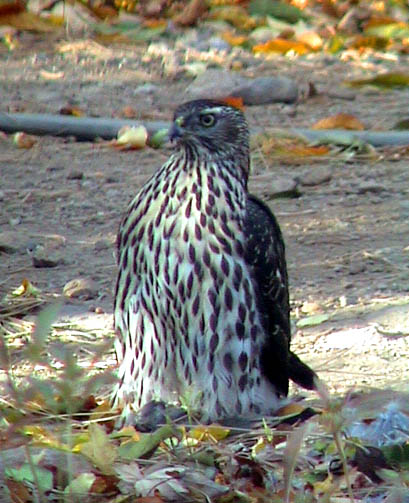
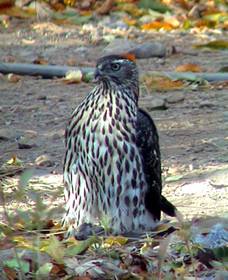
- Characteristic field marks of an immature hawk
- Appearance fairly bulky
|
|
3
|
|
|
4
|
|
|
5
|
|
|
6
|
- Weight 485 gm; general impression suggested accipiter or possible
buteo
- Sex - male
- Bare Parts – Bill dark brown tip to yellow
- at base; tarsi yellow-green;
irides pale yellow
- Molt – none in wings, tail or body
- Bursa – none
|
|
7
|
- Sharp-shinned 150 - 218gm
- Broad-winged Hawk 265 - 560gm
- Cooper’s Hawk 450gm
- Red-shouldered Hawk 550 - 750gm
- Goshawk 630-1099gm
|
|
8
|
|
|
9
|
|
|
10
|
- Weight is significantly higher than expected
- Supercilium, described as white, or pale indistinct
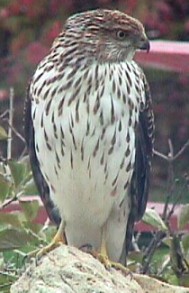
- Ventral streaking narrow; ground color of underparts pale buff
to nearly white.
|
|
11
|
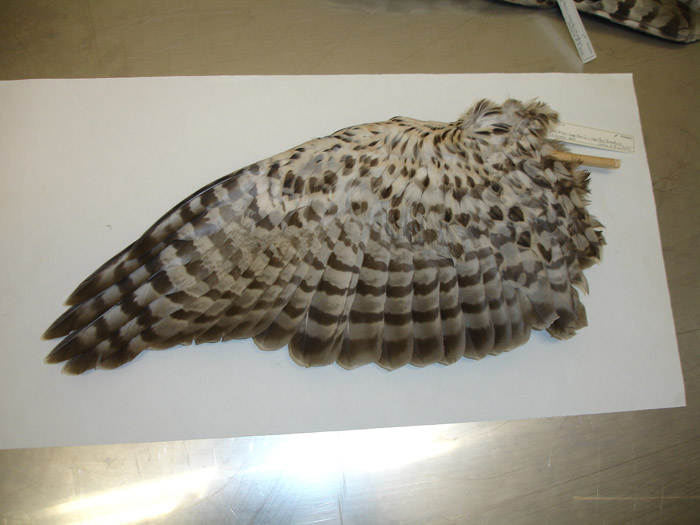
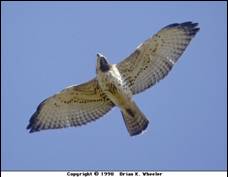
- Underside of wings with narrow dark brown bars or elongated streaks
- White spots or patches on scapulars and inner secondaries
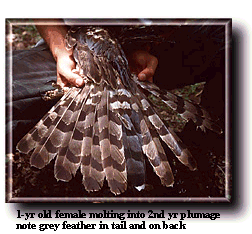
- Banded tail – underside of tail with 5-6 dark transverse bars.
|
|
12
|
- Weight is significantly lower than expected; No distinct bar across
wing, body should be lighter than other accipiters (one ref. says
darker)
- Upper parts with white and cinnamon markings
- Ventral streaking extends to undertail
|
|
13
|
- Only goshawk description mentions the color green for tarsi
- Wing with relatively straight leading edge, s-curve on trailing
edge.
- Tail bands appear wavy, bars edged in thin white
|
|
14
|
- Size right; body chunky, stubby
- White markings throughout upper parts
- Buteo with fairly pointed wing
- Suggestion of a dusky trailing edge to underwing; immatures can
have some barring on underwing
|
|
15
|
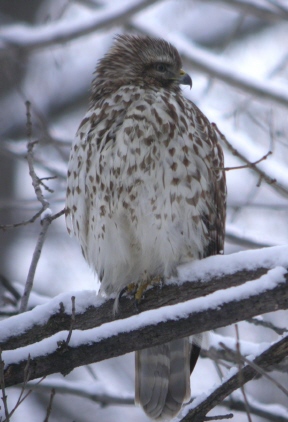
- Ventral streaking – “highly variable” “some juveniles show more
or less uniform streaking below”
- Superciliary line present in immatures
- Banded tail – juvenile tail when closed is long, narrow; juvenile
tail longer than adult; tail tipped in white
|
|
16
|
- Plumage - ventral streaking commonly concentrated on sides, across
belly
- Tail – broad dark subterminal band on tail; tails band width,
number
- Wing – underwings clean, white; dusky bar along trailing edge
giving “framed” appearance to underwing; shape of wing
|
|
17
|
- Size smaller than our specimen
- Streaking does not extend to undertail
- Supercilium less prominent
- Tail should be longer in comparison to body
- Tail bars should align
|
|
18
|
- In spite of low weight, proportions were acceptable
- Plumage not completely consistent with expectations, no distinct
“light bar” or “tawny streak” across wing
- Ventral streaking thinner than seen in some birds, but streaks
do extend down to undertail
- Bold superciliary line
- Wing shape and pattern as expected; virtually straight (no bend
at ‘wrist’) leading edge, curved trailing edge
- Green tone in tarsi
- Wide tail bands, wavy, thin white rim to each, zig-zag when spread
|
|
19
|
|
|
20
|
- Birds of North America
- Sibley, D. 2000,The Sibley Guide to Birds
- Bent’s Life Histories on line
- USGS Patuxent WildlifeResearch Center
- HMANA Eastern Raptor Migrant Guide
- Hanging Rock Raptor Observatory, W. VA
- Dunne, P. Sibley, D., Sutton, C. 1988, Hawks in Flight
|

 Notes
Notes