|
1
|
- Ornithological Study
- DVOC (http://www.dvoc.org)
- Presented by Scott Fraser, http://fraser.blogs.com
- September 7, Anno Domini 2006
- (All photos by Scott Fraser except where noted)
|
|
2
|
|
|
3
|
- Also known as “Scientific Names” or “Binomial Names”
- Vernacular names (common, non-scientific) are not always specific
enough
- Allow a species to be identified as “that particular one”
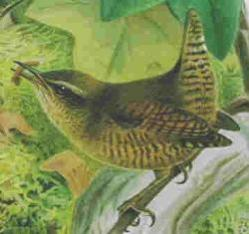
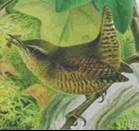
- Example… The Winter Wren
|
|
4
|
- Picture a “Yankee” birding in England with some local birding
blokes
- The Blokes: “Look, a Wren!”
- Yankee: “Wait a second… that’s a bloody Winter Wren!”
- Same species – different “common” names
|
|
5
|
- Picture a “Yankee” birding in England with some local birding
blokes
- The Blokes: “Look, a Wren!”
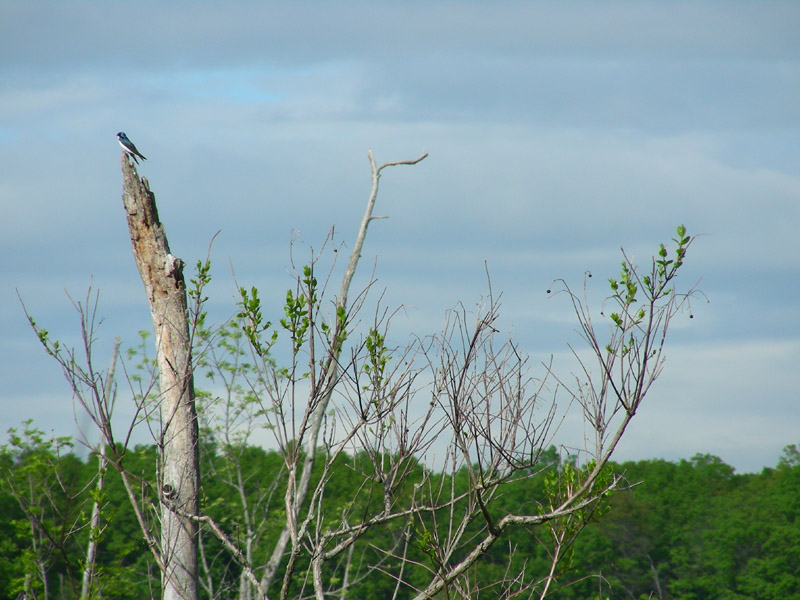
- Yankee: “Wait a second… that’s a bloody Winter Wren!”
- Same species – different “common” names
|
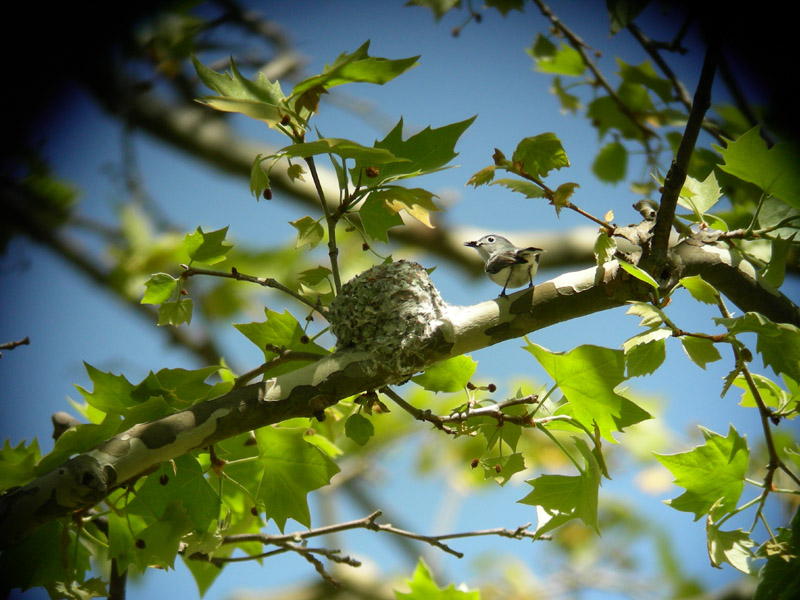
|
6
|
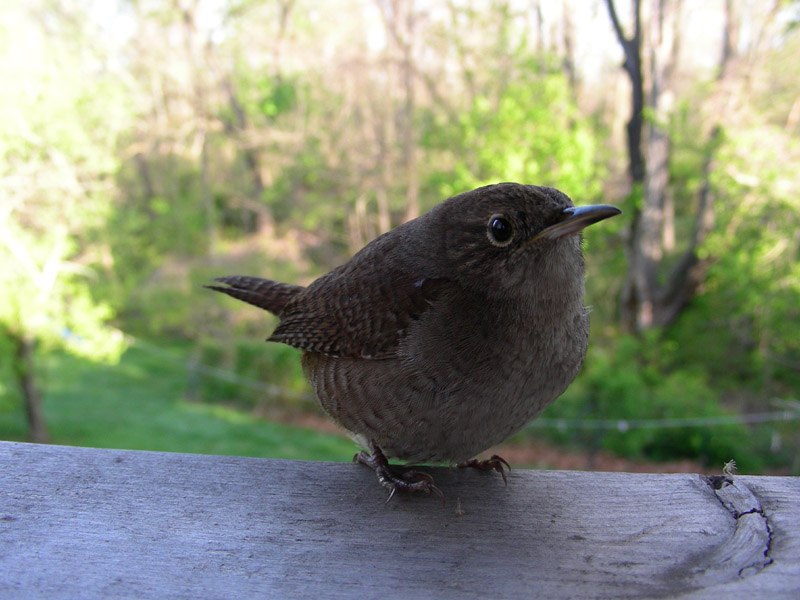
- Picture a “Yankee” birding in England with some local birding
blokes
- The Blokes: “Look, a Wren!”
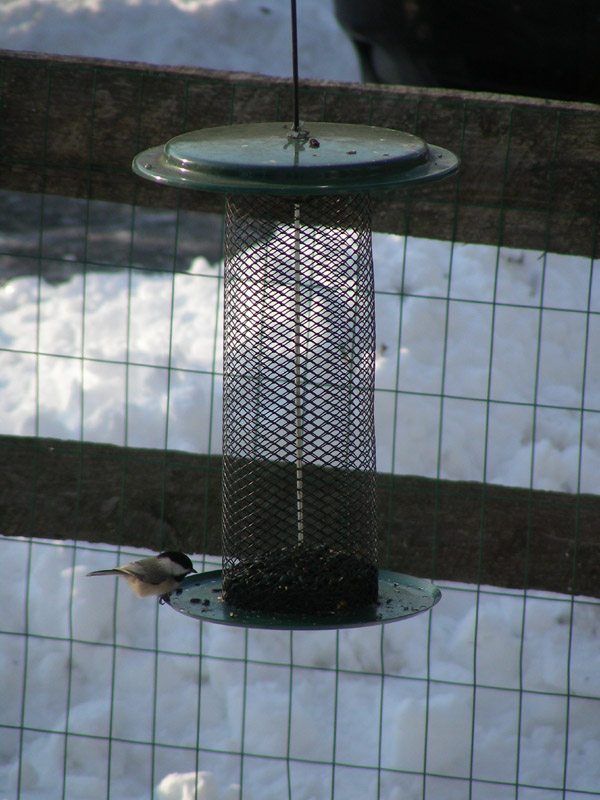
- Yankee: “Wait a second… that’s a bloody Winter Wren!”
- Same species – different “common” names
|
|
7
|
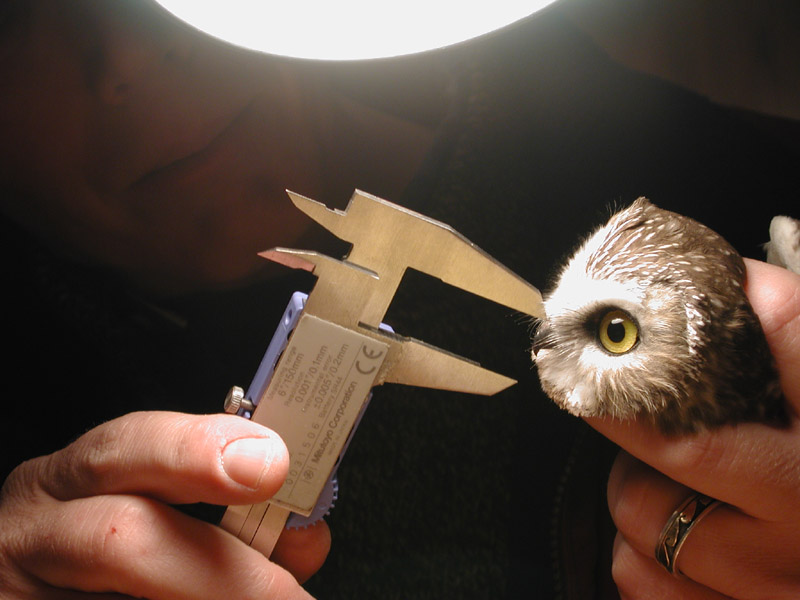
- Every species can be unambiguously identified with a two word
name
- Latin is universal, therefore the names can be used worldwide
- Rules followed in the binomial naming system encourage “stability”
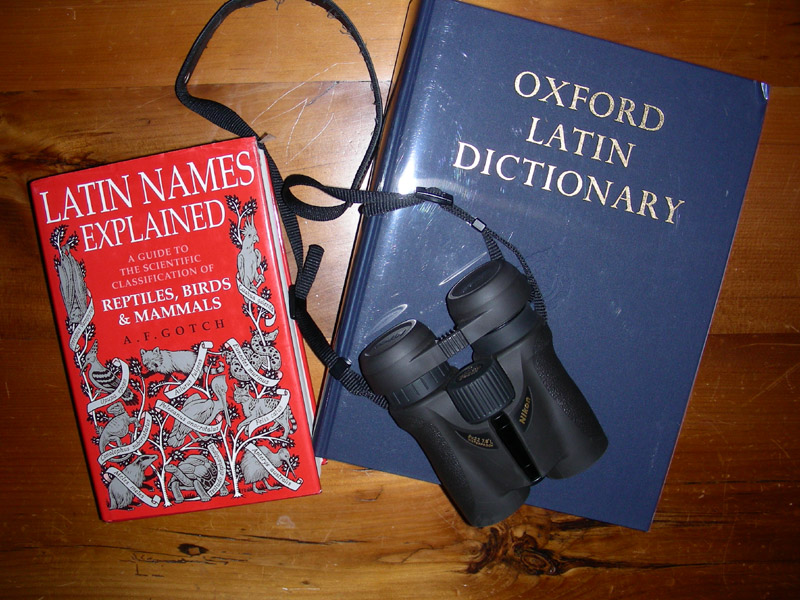
- Lugging the Oxford Latin Dictionary around with you when birding
is great exercise
|
|
8
|
- Every species can be unambiguously identified with a two word
name
- Latin is universal, therefore the names can be used worldwide
- Rules followed in the binomial naming system encourage “stability”
- Lugging the Oxford Latin Dictionary around with you when birding
is great exercise
|
|
9
|
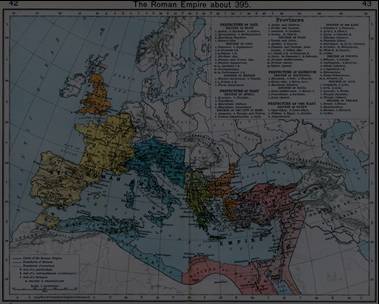
- Language of the Roman Republic and Empire
- Later used by scholars and the Catholic Church
- 60% of our English words are based directly or indirectly on Latin
|
|
10
|
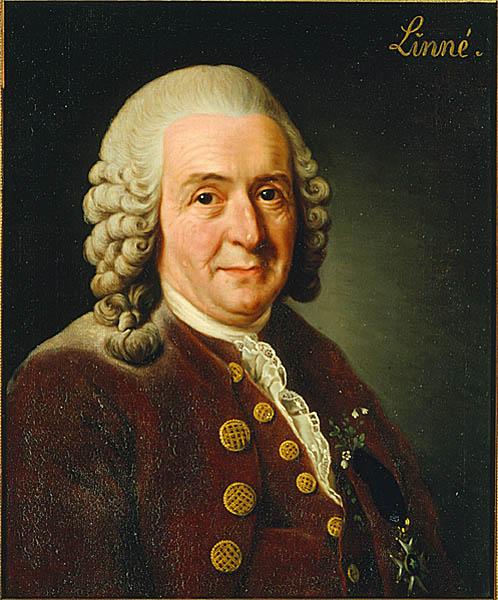
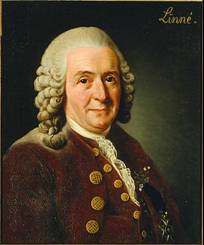
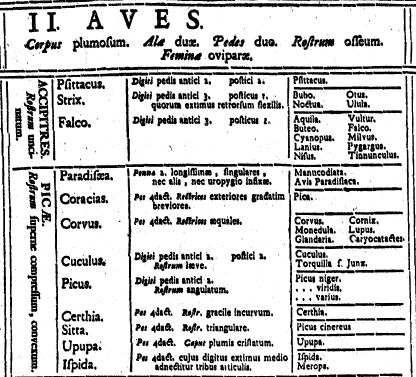
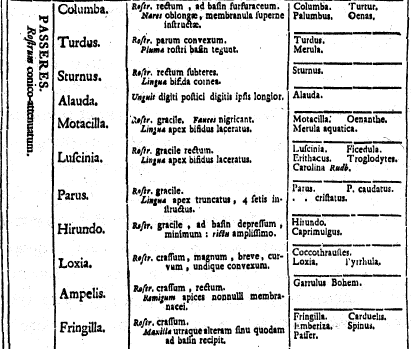
- Started by Swedish naturalist Carl von Linné, aka:
- Carl Linnaeus
- Carolus Linnaeus
- Carl von Linné
- Carl Linné
|
|
11
|
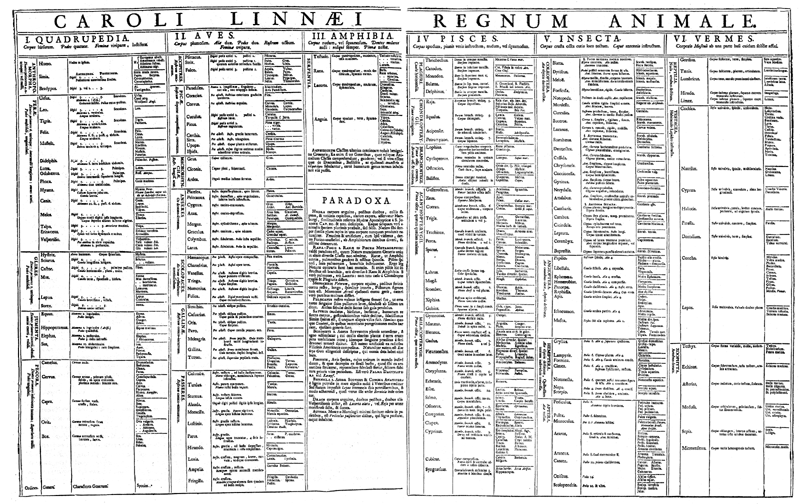
- 1st edition published in 1735 and only 13 pages long
- Title (translated): “System of nature through the three kingdoms
of nature, according to classes, orders, genera and species, with
[generic] characters, [specific] differences, synonyms, places”
- The 10th edition, published in 1758, marks the official start
of all Latin Names used today. Names published prior to January
1, 1758 are bogus.
|
|
12
|
- Linnaeus broke the world’s species into Animal, Plant, and “Mineral”
Kingdoms
- Kingdom were made up of Classes
- Classes were made up of Orders
- Orders were split into Genera (singular for this is genus)
- Genera were divided into species (singular for this is species)
- Sometimes he allowed an unnamed rank of taxa at a lower level
(these became “varieties” in the plant Kingdom)
- Subdivisions that have been added since then:
- Phyla (singular: phylum)
- Superclasses
- Superorders
- Infarorders
- Families
- Superfamilies
- Tribes
- Additional subdivisions used for species rich categories, for
example Beetles use Infarorders
|
|
13
|
|
|
14
|
|
|
15
|
|
|
16
|
- Taxon divisions:
- Domain
- Kingdom
- Phylum (animals or plants) or Division (plants)
- Class
- Order
- Family
- Genus
- Species
- Subspecies
|
|
17
|
- Binomial nomenclature is the formal way of identifying species
- Named species have a two part name, with a genus and species descriptor
- First is the “generic” name (based on the Latin word genus, meaning
birth or origin)
- A “genus” is made up of closely related animals (or plants)
- The second name is the “specific”, which names the species in
that group
- Generic names should be nouns, and the specific an adjective
|
|
18
|
- The basic rules to followed today:
- Italicize (or underline if handwritten)
- Genus is always capitalized
- Species is always lower case, even when based on a name
- For hard core science, the name is followed by the abbreviated
name of the bloke who named it, and sometimes even the year
- If next to a common name, the scientific name is always in parenthesis
- Spell it out in full first, then abbreviate the genus if repeated
- Popular exceptions: E. coli and T. Rex
- Use the abbreviation “sp.” or “spec.” if the species is unknown
- Example: The Four Loons are known to struggle with Accipter
sp.
- Use “cf.” if the identification is shaky
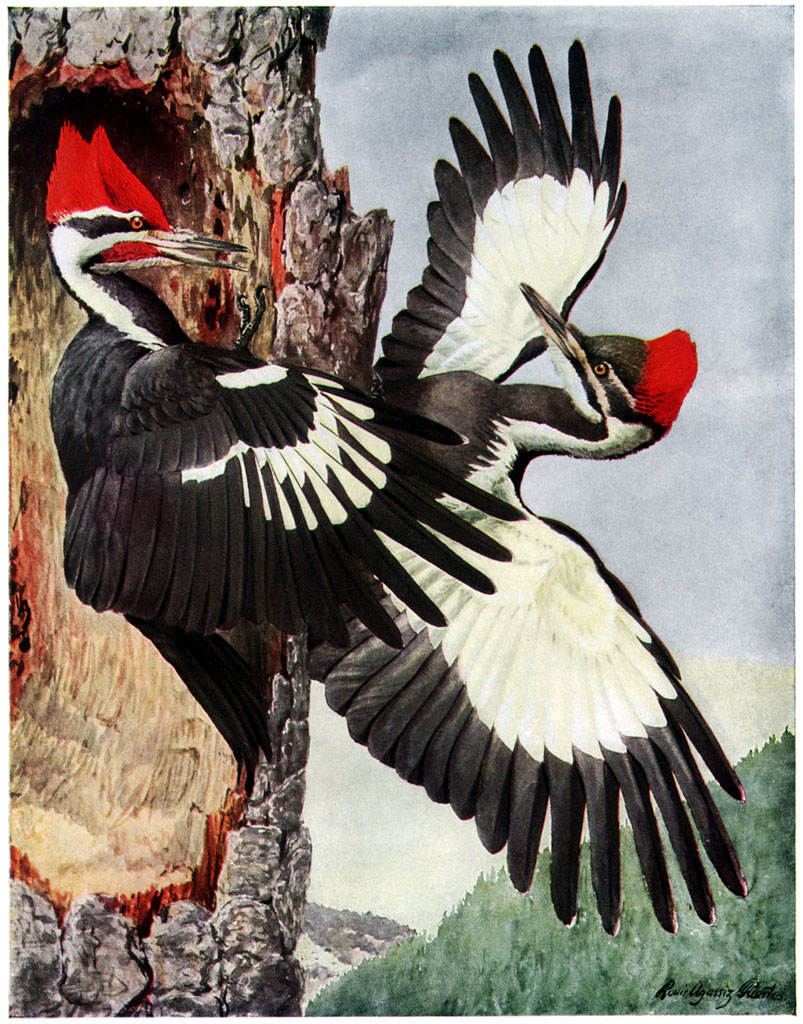
- Did you see the wings on that woodpecker?
- Example: The Lagerhead Shrikes checklist included Campephilus
cf. principalis
|
|
19
|
- Kingdom: Animalia
- Phylum: Chordata
- Class: Aves
- 27 taxa called orders ending in “-iformes”
- 161 familes below those orders ending in “-idae”
- Some further divisions into subfamilies ending in “-inae”
|
|
20
|
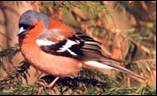
- Phylum: Chordata (Greek and Latin roots, referring to notochord
present in all animals of this phylum)
- Subphylum: Vertebrata (Latin roots, meaning to have a jointed
back. In this taxa the notochord develops into the spine.)
- Class: Aves (Latin for, um, BIRD.)
- Order: Passeriformes (Passer is Latin for a sparrow or small bird)
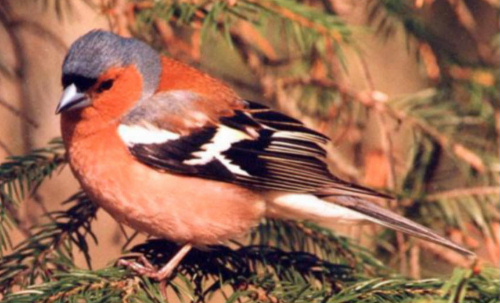
- Family: Fringillidae (Fringilla is Latin for a small bird)
- Genus: Fringilla
- Species: F. coelebs (Caelebs is Latin for being unmarried. Chaffinch’s
sometimes gather in large unisex flocks, and the belief was that
the females had all flown south leaving the males.)
- Hence the Latin name Fringilla coelebs: “A small bachelor bird”
|
|
21
|
- We use them all the time… but
how often do you know of the reason for a name, or even just the
translation to the root Latin (or Greek) words?
- DVOC’ers love quizzes, so let’s get started!
|
|
22
|
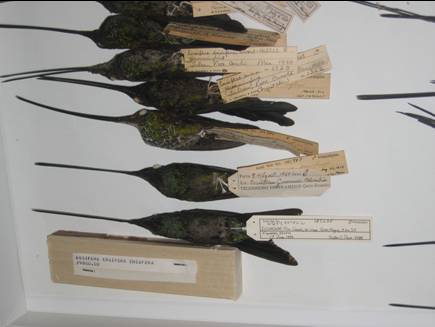
- Carrying or wearing a sword.
- Only species of bird to have a bill longer than the rest of its
body.
|
|
23
|
- Carrying or wearing a sword.
- Only species of bird to have a bill longer than the rest of its
body.
- Sword-billed Hummingbird
|
|
24
|
- Carrying or wearing a sword.
- Only species of bird to have a bill longer than the rest of its
body.
- Sword-billed Hummingbird
|
|
25
|
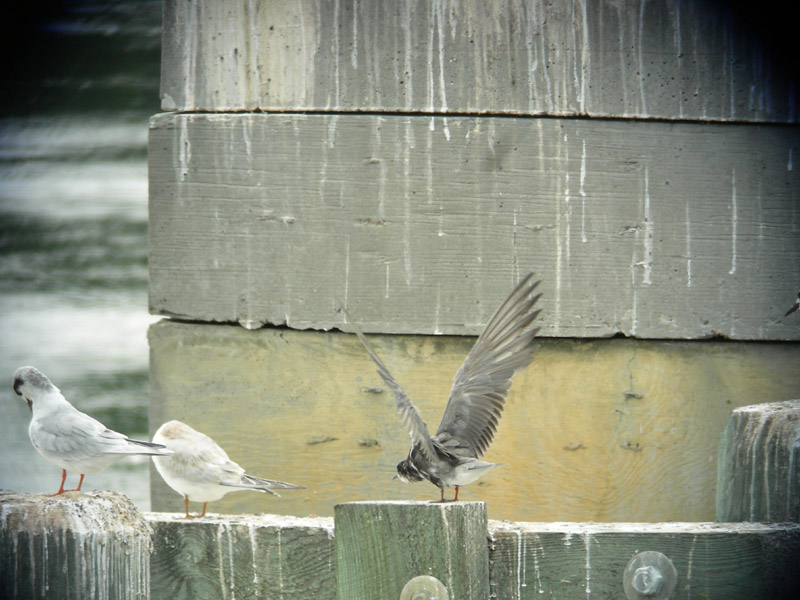
- Misspelling of Greek word for swallow (khelidonios)
- Reference to swallow-like wings and tail
- Niger is Latin for black
|
|
26
|
- Misspelling of Greek word for swallow (khelidonios)
- Reference to swallow-like wings and tail
- Niger is Latin for black
- Black Tern
|
|
27
|
- Misspelling of Greek word for swallow (khelidonios)
- Reference to swallow-like wings and tail
- Niger is Latin for black
- Black Tern
|
|
28
|
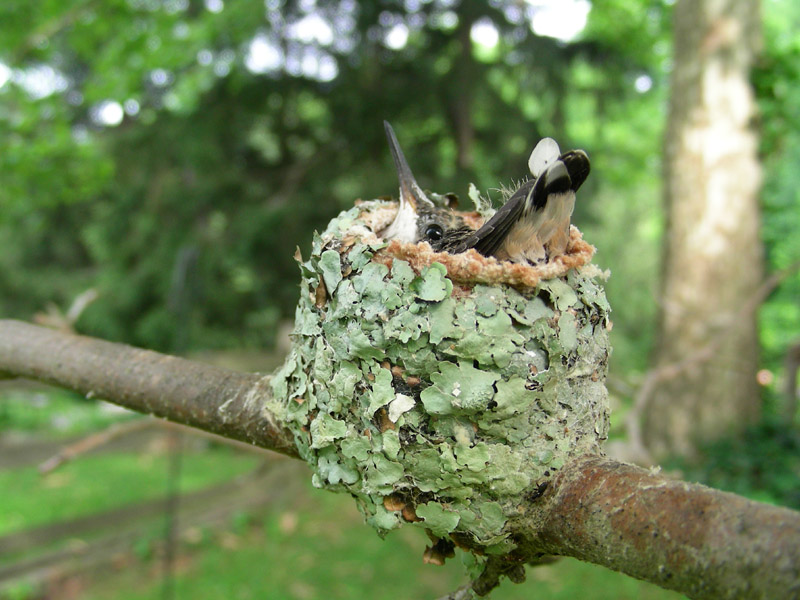
- Archilochus was a Greek poet of 700 B.C.
- Colubra is Latin for a snake
- Colubrifer means snake-bearing, as in snake-haired like a hydra
- Colibri mean hummingbird in some other languages
|
|
29
|
- Archilochus was a Greek poet of 700 B.C.
- Colubra is Latin for a snake
- Colubrifer means snake-bearing, as in snake-haired like a hydra
- Colibri mean hummingbird in some other languages
- Ruby-throated Hummingbird
- I have NO idea!
|
|
30
|
- Archilochus was a Greek poet of 700 B.C.
- Colubra is Latin for a snake
- Colubrifer means snake-bearing, as in snake-haired like a hydra
- Colibri mean hummingbird in some other languages
- Ruby-throated Hummingbird
- I have NO idea!
|
|
31
|
- Picus was a son of Saturn, who was changed by Circe into a bird
- Picus is Latin for woodpecker
- pubes means the age or condition of puberty
|
|
32
|
- Picus was a son of Saturn, who was changed by Circe into a bird
- Picus is Latin for woodpecker
- pubes means the age or condition of puberty
- Downy woodpecker
|
|
33
|
- Picus was a son of Saturn, who was changed by Circe into a bird
- Picus is Latin for woodpecker
- pubes means the age or condition of puberty
- Downy woodpecker
|
|
34
|
- Vermis is Latin for a worm
- Vora is Latin for “I devour”
- Pinus is Latin for a pine
- Family Parulidae
- Parula is based on parus, the Latin name for a titmouse
- “-ulus” is the Latin diminutive suffix
|
|
35
|
- Vermis is Latin for a worm
- Vora is Latin for “I devour”
- Pinus is Latin for a pine
- Family Parulidae
- Parula is based on parus, the Latin name for a titmouse
- “-ulus” is the Latin diminutive suffix
- Blue-winged Warbler
|
|
36
|
- Vermis is Latin for a worm
- Vora is Latin for “I devour”
- Pinus is Latin for a pine
- Family Parulidae
- Parula is based on parus, the Latin name for a titmouse
- “-ulus” is the Latin diminutive suffix
- Blue-winged Warbler
|
|
37
|
- takhus is Greek for fast and swift
- kineo is Greek for “I move”
- kinetes is Greek for “a mover”
- Bicolor is Latin for “of two colors”
- Family Hirundinidae
- Hirundo is Latin for a swallow
|
|
38
|
- takhus is Greek for fast and swift
- kineo is Greek for “I move”
- kinetes is Greek for “a mover”
- Bicolor is Latin for “of two colors”
- Family Hirundinidae
- Hirundo is Latin for a swallow
- Tree Swallow
|
|
39
|
- takhus is Greek for fast and swift
- kineo is Greek for “I move”
- kinetes is Greek for “a mover”
- Bicolor is Latin for “of two colors”
- Family Hirundinidae
- Hirundo is Latin for a swallow
- Tree Swallow
|
|
40
|
- Polios is Greek for hoary or grey, ptilon is Greek for a feather
or wing
- Caeruleatus means colored with blue
- Caeruleum means Azurite or a kind of blue glass
- Caeruleus is blue like the sky or greenish-blue like the sea
- Order Passeriformes
- Passer is Latin for a sparrow or small bird
- Forma is Latin for form or shape
- Family Sylviidae
- Silva is Latin for a wood or forest
|
|
41
|
- Polios is Greek for hoary or grey, ptilon is Greek for a feather
or wing
- Caeruleatus means colored with blue
- Caeruleum means Azurite or a kind of blue glass
- Caeruleus is blue like the sky or greenish-blue like the sea
- Order Passeriformes
- Passer is Latin for a sparrow or small bird
- Forma is Latin for form or shape
- Family Sylviidae
- Silva is Latin for a wood or forest
- Blue-gray Gnatcatcher
|
|
42
|
- Polios is Greek for hoary or grey, ptilon is Greek for a feather
or wing
- Caeruleatus means colored with blue
- Caeruleum means Azurite or a kind of blue glass
- Caeruleus is blue like the sky or greenish-blue like the sea
- Order Passeriformes
- Passer is Latin for a sparrow or small bird
- Forma is Latin for form or shape
- Family Sylviidae
- Silva is Latin for a wood or forest
- Blue-gray Gnatcatcher
|
|
43
|
- Trogle is Greek for a hole or hollow
- Dutes is Greek for a burrower
- Trogludutes is Greek for one who creeps into holes
- Aedon is Greek for a songstress
- King Friday (of Mister Roger’s Neighborhood fame) had two birds
– one named Troglodytes and one named Aedon
- Family TROGLODYTIDAE
- Order PASSERIFORMES
|
|
44
|
- Trogle is Greek for a hole or hollow
- Dutes is Greek for a burrower
- Trogludutes is Greek for one who creeps into holes
- Aedon is Greek for a songstress
- King Friday (of Mister Roger’s Neighborhood fame) had two birds
– one named Troglodytes and one named Aedon
- Family TROGLODYTIDAE
- Order PASSERIFORMES
- House Wren
|
|
45
|
- Trogle is Greek for a hole or hollow
- Dutes is Greek for a burrower
- Trogludutes is Greek for one who creeps into holes
- Aedon is Greek for a songstress
- King Friday (of Mister Roger’s Neighborhood fame) had two birds
– one named Troglodytes and one named Aedon
- Family TROGLODYTIDAE
- Order PASSERIFORMES
- House Wren
|
|
46
|
- Poicile is Greek for the frescoed porch or gallery in Athens where
Zeno taught.
- Ater is Latin for black, and capillus is Latin for the hair on
man’s head
- Belongs in a separate genus according to the AOU
- Regarded as a subgenus under Parus by some
|
|
47
|
- Poicile is Greek for the frescoed porch or gallery in Athens where
Zeno taught.
- Ater is Latin for black, and capillus is Latin for the hair on
man’s head
- Belongs in a separate genus according to the AOU
- Regarded as a subgenus under Parus by some
- Black-capped chickadee
|
|
48
|
- Poicile is Greek for the frescoed porch or gallery in Athens where
Zeno taught.
- Ater is Latin for black, and capillus is Latin for the hair on
man’s head
- Belongs in a separate genus according to the AOU
- Regarded as a subgenus under Parus by some
- Black-capped chickadee
|
|
49
|
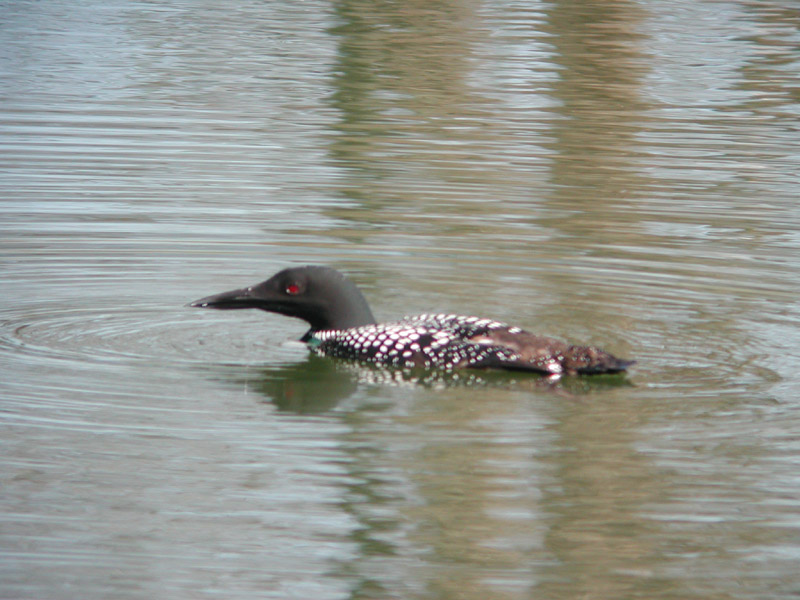
- Gavia is Latin for a bird
- Order Gaviiformes
- Family Gaviidae (4 species)
- Immergo is Latin for dipping or plunging into a liquid, to immerse,
to sink, to plunge
|
|
50
|
- Gavia is Latin for a bird
- Order Gaviiformes
- Family Gaviidae (4 species)
- Immergo is Latin for dipping or plunging into a liquid, to immerse,
to sink, to plunge
- Common Loon
|
|
51
|
- Gavia is Latin for a bird
- Order Gaviiformes
- Family Gaviidae (4 species)
- Immergo is Latin for dipping or plunging into a liquid, to immerse,
to sink, to plunge
|
|
52
|
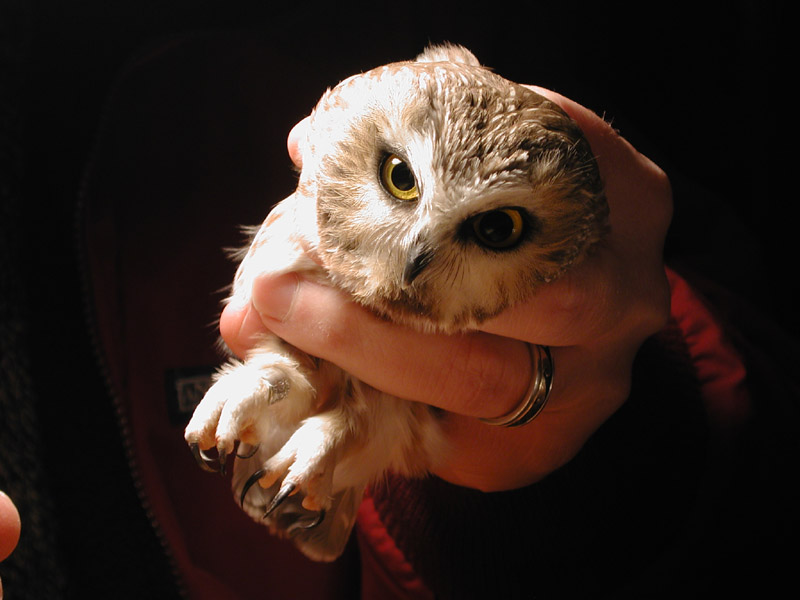
- Aigolios is Greek for a night bird of prey
- Acadicus = acadian, a French named colonial territory in Northeastern
America including Quebec, the Maritime Provinces, and New England
|
|
53
|
- Aigolios is Greek for a night bird of prey
- Acadicus = acadian, a French named colonial territory in Northeastern
America including Quebec, the Maritime Provinces, and New England
- Northern Saw-whet Owl
|
|
54
|
- Aigolios is Greek for a night bird of prey
- Acadicus = acadian, a French named colonial territory in Northeastern
America including Quebec, the Maritime Provinces, and New England
- Northern Saw-whet Owl
|
|
55
|
- Sturnella neglecta
- Neglectus is Latin for neglect or neglecting
- Sturnus is Latin for a Starling
- This widespread and common bird was “neglected” for almost 100
years here in North America before being split in the 1800’s
- Pinicola enucleator
- Pinus is Latin for pine-tree
- Colo is Latin for “inhabit”
- Enucleo is Latin for “I take out the kernel”
- Dacelo gigas
- Gigas is Latin for giant
- Dacelo is an anagram of alcedo
- Alcedo is Latin for a Kingfisher
- Polygonia interrogationis
- Polygonus is Latin for polygonal
- Interrogatio is Latin for a question, an inquiry
- Trick question!
|
|
56
|
- Sturnella neglecta
- Neglectus is Latin for neglect or neglecting
- Sturnus is Latin for a Starling
- This widespread and common bird was “neglected” for almost 100
years here in North America before being split in the 1800’s
- Western Meadowlark
- Pinicola enucleator
- Pinus is Latin for pine-tree
- Colo is Latin for “inhabit”
- Enucleo is Latin for “I take out the kernel”
- Pine Grosbeak
- Dacelo gigas
- Gigas is Latin for giant
- Dacelo is an anagram of alcedo
- Alcedo is Latin for a Kingfisher
- Kookaburra!
- Polygonia interrogationis
- Polygonus is Latin for polygonal
- Interrogatio is Latin for a question, an inquiry
- Trick question!
- Question Mark, a butterfly
|
|
57
|
- Sturnella neglecta
- Neglectus is Latin for neglect or neglecting
- Sturnus is Latin for a Starling
- This widespread and common bird was “neglected” for almost 100
years here in North America before being split in the 1800’s
- Western Meadowlark
- Pinicola enucleator
- Pinus is Latin for pine-tree
- Colo is Latin for “inhabit”
- Enucleo is Latin for “I take out the kernel”
- Pine Grosbeak
- Dacelo gigas
- Gigas is Latin for giant
- Dacelo is an anagram of alcedo
- Alcedo is Latin for a Kingfisher
- Kookaburra!
- Polygonia interrogationis
- Polygonus is Latin for polygonal
- Interrogatio is Latin for a question, an inquiry
- Trick question!
- Question Mark, a butterfly
|

 Notes
Notes