|
1
|
|
|
2
|
- Chemical Defense: Use or containment of chemical substances to deter
predators and/or parasites
- Poisonous Species: Organisms that deliver toxins by being ingested or
having their toxins ingested by another organism
- Venomous Species: Organisms that exhibit highly developed cellular
mechanisms for toxin production and have a corresponding delivery system
|
|
3
|
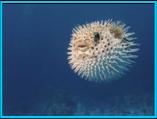
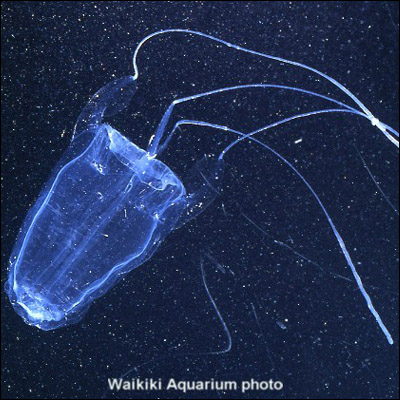
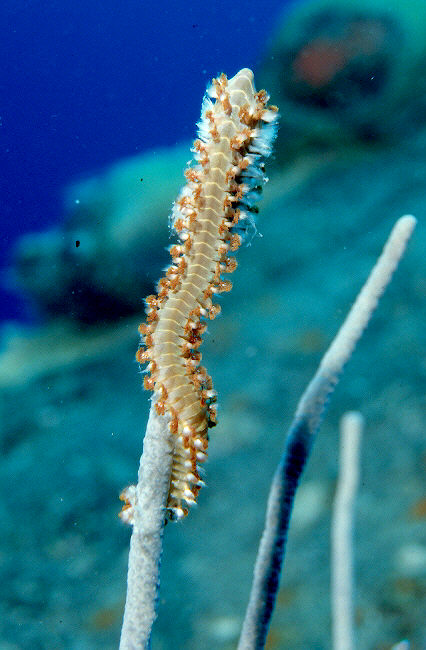
- Invertebrates
- Porifera
- Cnidaria
- Annelida
- Echinodermata
- Arthropoda
- Mollusca
- Vertebrates
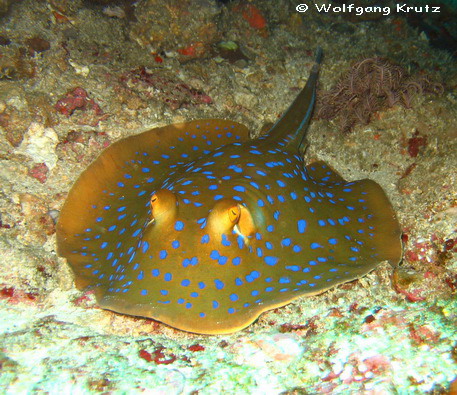
- Osteichthyes
- Chondrichthyes
- Amphibia
- Lepidosauromorpha
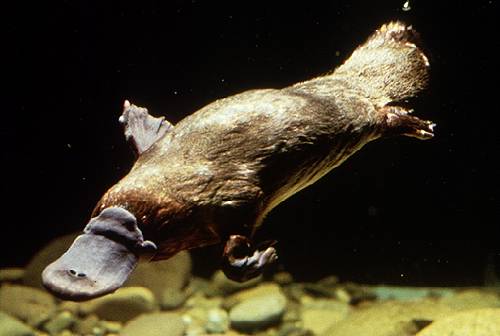
- Mammalia
- Birds -- Overlooked
|
|
4
|
- Northern Shoveler
- Common Eider
- Greater Honeyguide
- Eurasian Hoopoe
- Pied Kingfisher
- Black Cuckoo
|
|
5
|
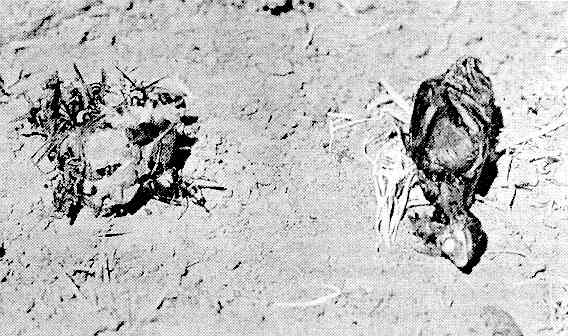
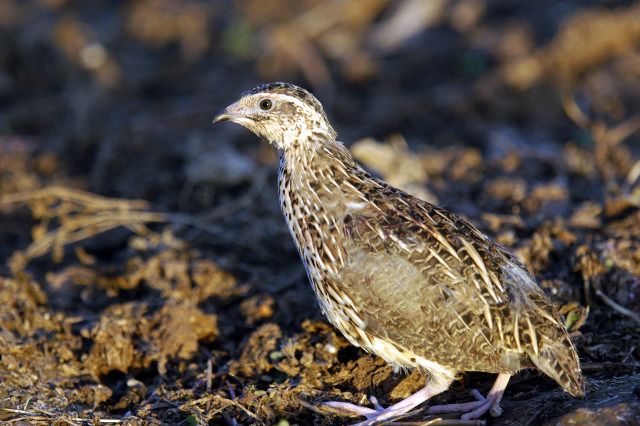
- Eurasian Quail
- Coturnism - nausea, muscle pain, rarely death
- Unknown Chemical
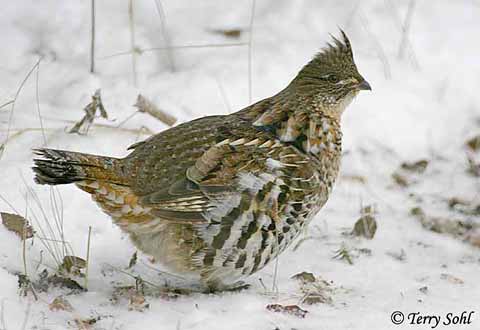
- Ruffed Grouse
- Partridge Poisoning - nausea, delirium, pain, possibly death
- Andromedotoxin?
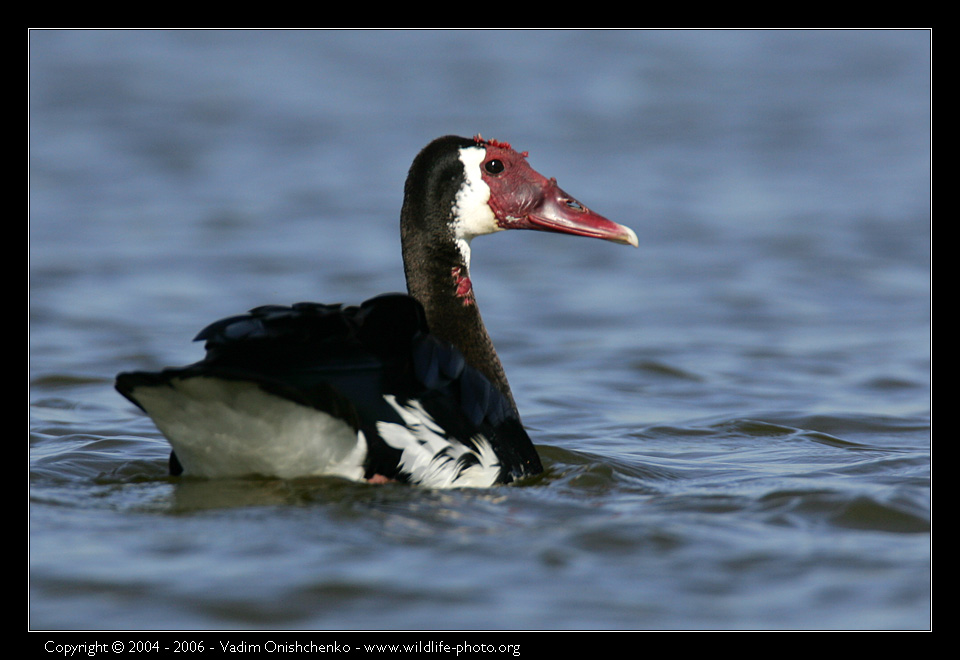
- Spur-winged Goose
- Cantharidin - Systemic Toxin
- Beetles (Meloidae)
|
|
6
|
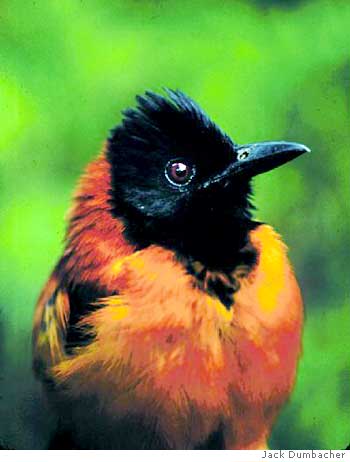
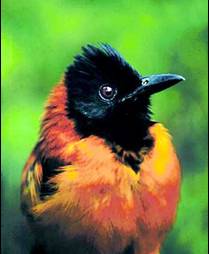
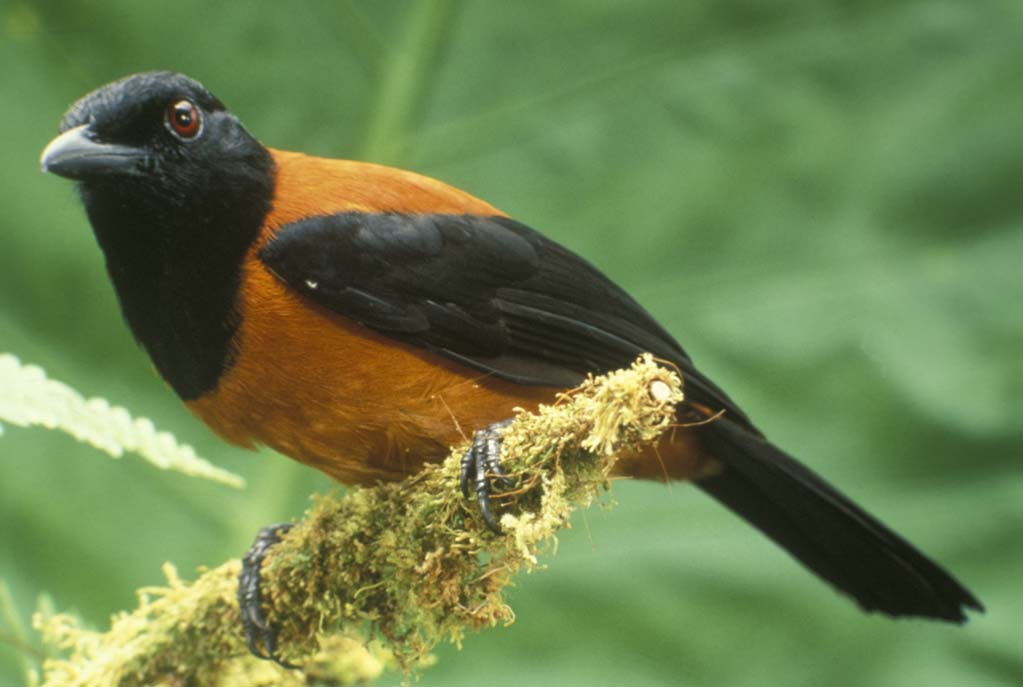
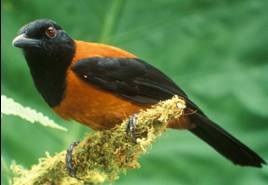
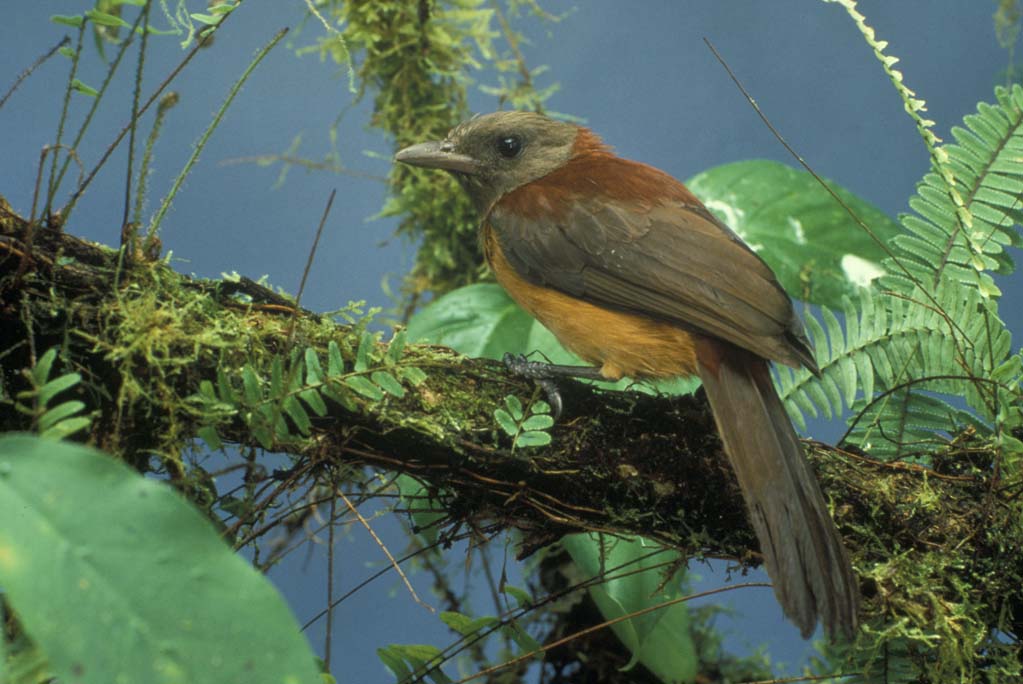
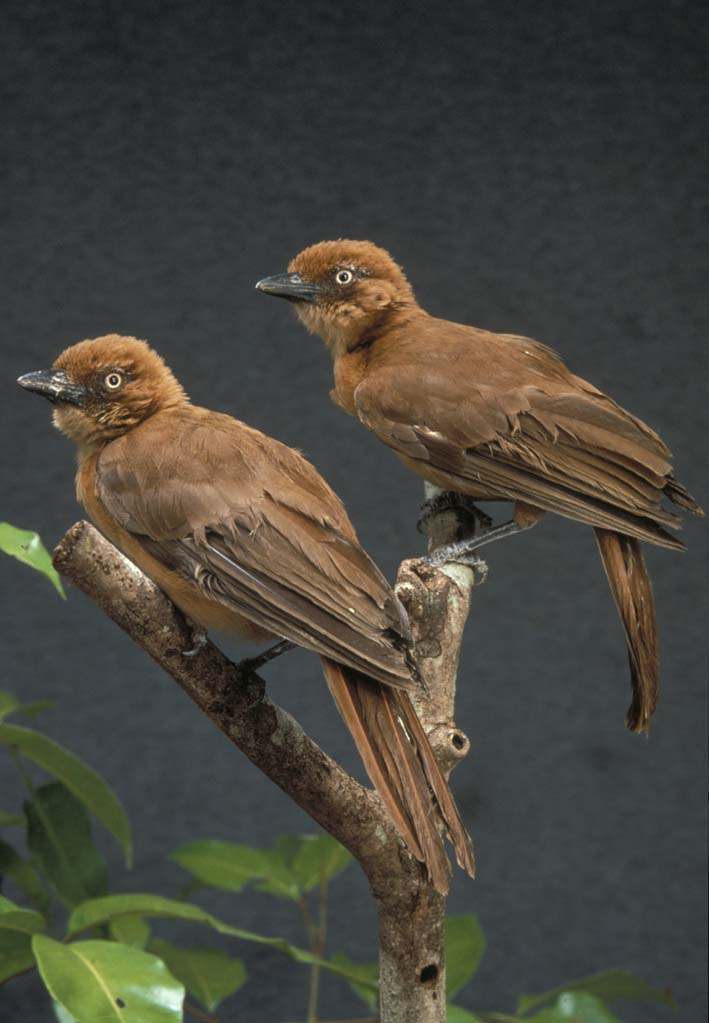
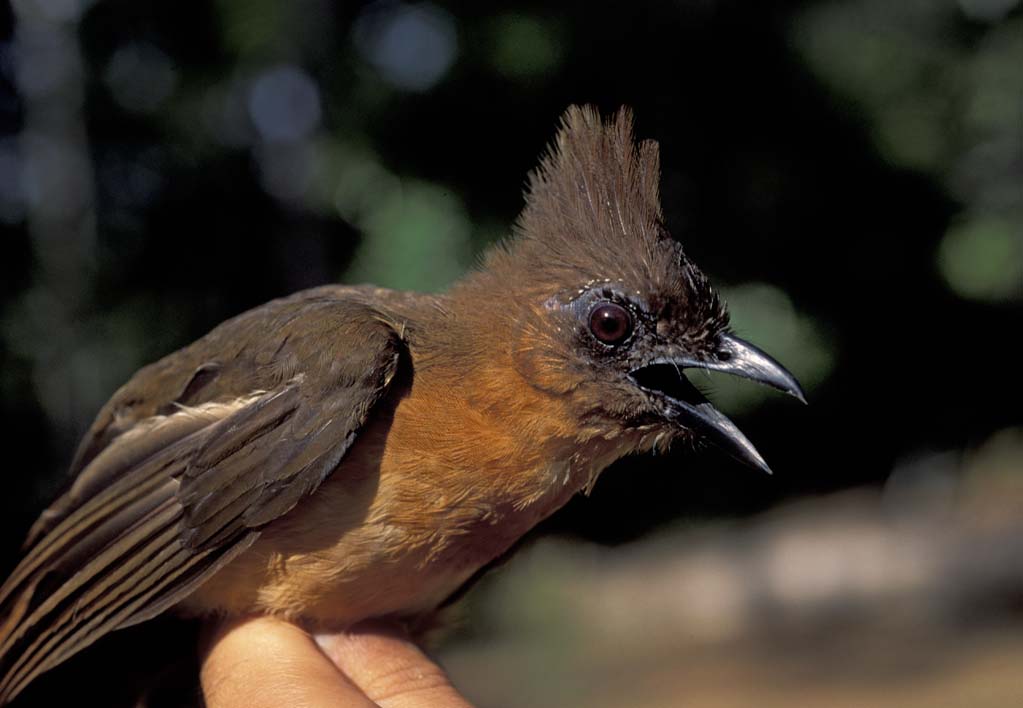
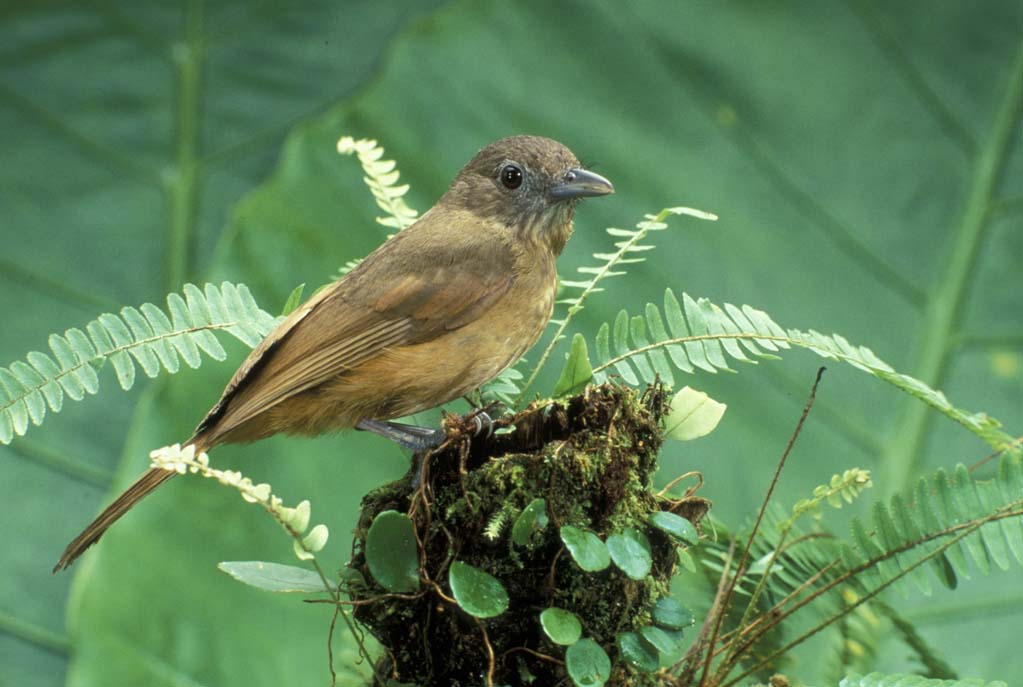
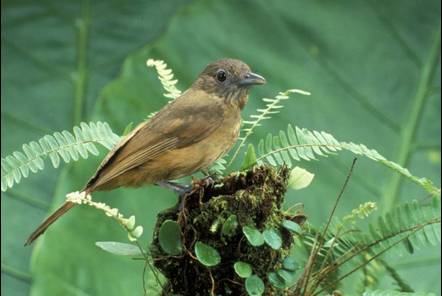
- New Guinea, 1989 - John Dumbacher catches Hooded Pitohui
- Nanisani: Numbness, burning, tingling
- Rubbish Birds: Hooded & Variable Pitohui
|
|
7
|
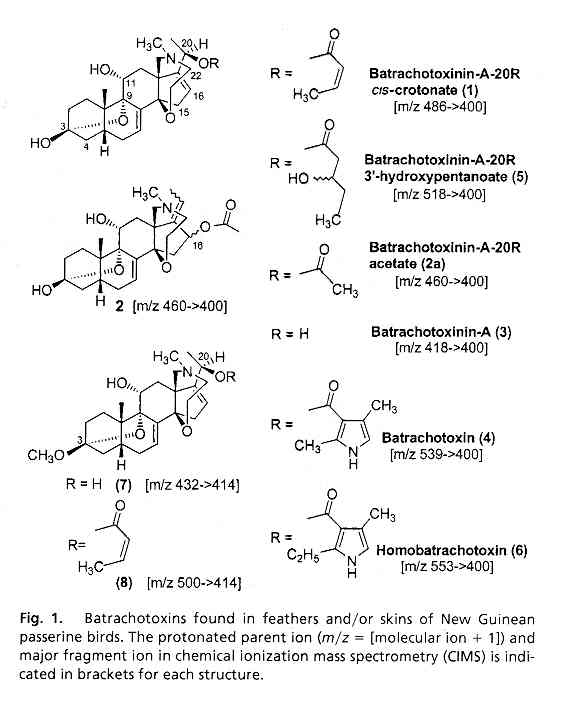
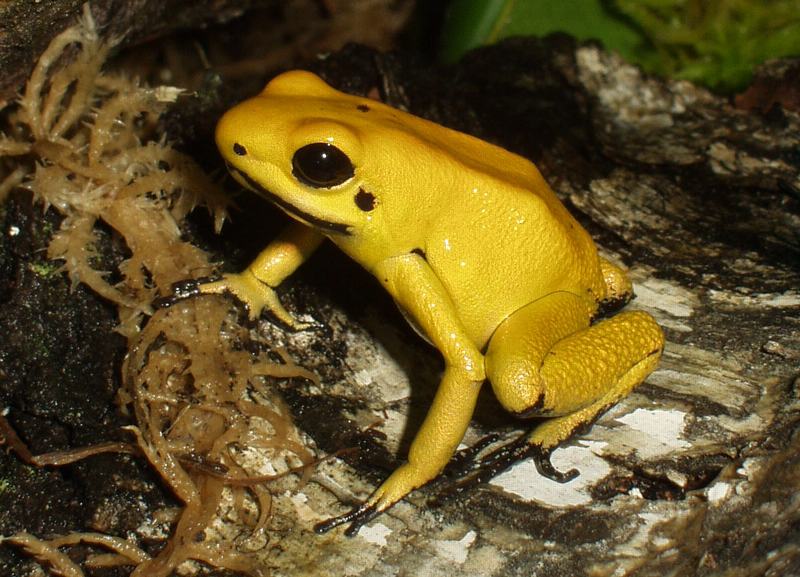
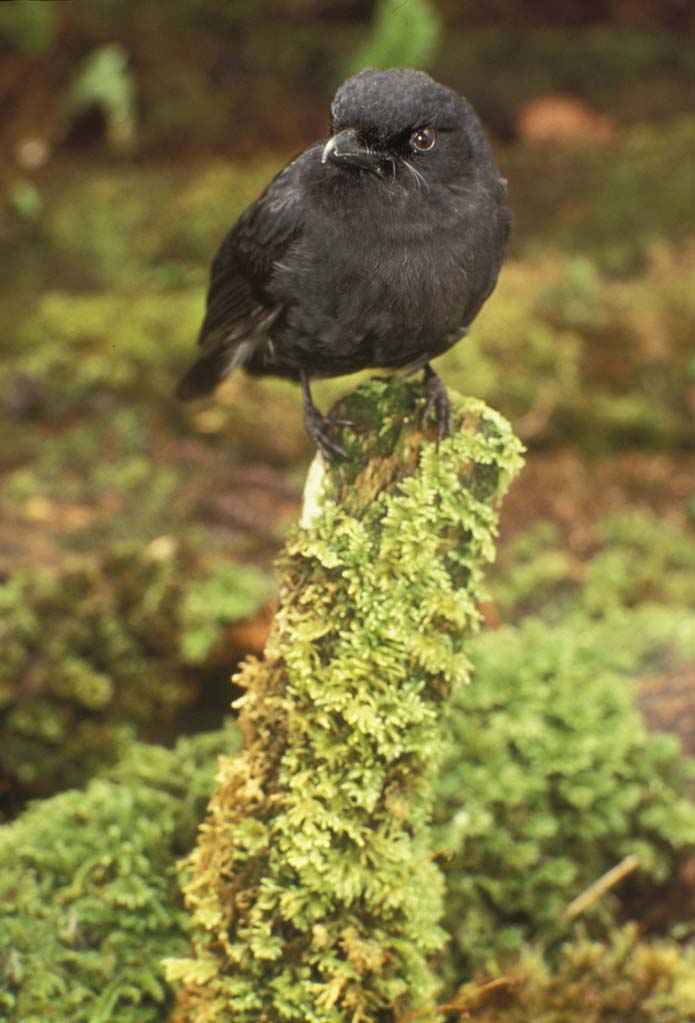
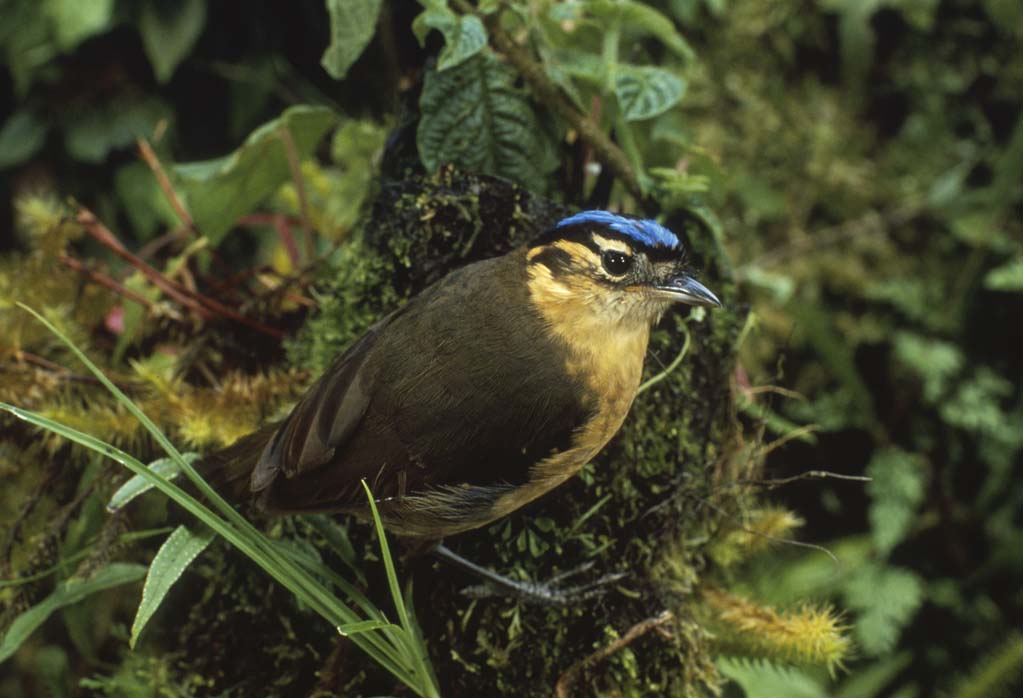
- Batrachotoxins bind to sodium ion channels, causing depolarization
- Disrupts muscle & nerve function
- Previously only known in three species of Phyllobates frogs in Colombia
- Other Symptoms: Nausea, sneezing, convulsions, paralysis, death
|
|
8
|
|
|
9
|
|
|
10
|
|
|
11
|
|
|
12
|
- Variable toxicity from location to location
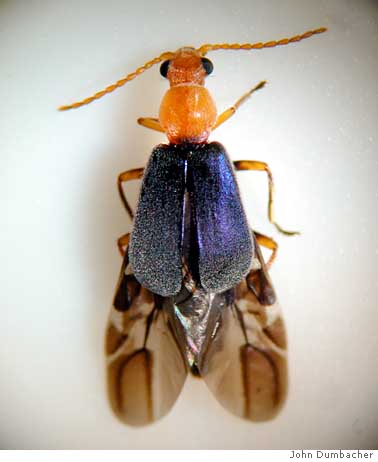
- Source: Diet, possibly beetles
- (Genus Choresine, Family Melyridae)
- Toxin Sequestration: Feathers & skin
- Parasite Relief: Feather Lice
- Predators: Snakes, Raptors, Humans,
Arboreal Marsupials
- Aposematism: Conspicuous colors
- to denote toxicity
- Toxic species produce a strong sour odor
- Toxic powder down
- Müllerian Mimicry: One or more toxic species resembling a more common
toxic species
|
|
13
|
|
|
14
|
- I want to thank Matt Sharp & The Academy of Natural Sciences for
allowing me to use images from the VIREO
collection (slides 6 &
8-11)
- Slide 4: For Photo information
see (Weldon 2000)
- Slide 7: For Figure information see (Dumbacher et al 2000)
- Many of the articles on this topic are available on-line at John
Dumbacher’s Website: http://www.calacademy.org/research/bmammals/jdumbacher.html
- Additional Images were borrowed from the following websites:
- Slide 1:
http://www.sfgate.com/cgi-bin/article.cgi?file=/c/a/2005/02/14/MNGUKBAJS61.DTL
- Slide 2: http://www.kostich.com/timber_rattlesnake.htm
- Slide 2: http://www.splashdowndivers.com/photo_gallery/fish.htm
- Slide 3: http://encarta.msn.com/media_461534650/Platypus.html
- Slide 3: http://www.waterworxbali.com/blue-spotted-stingray.shtml
- Slide 3:
http://www.reefseekers.com/PIXPAGES/Bonaire%20'04/Bristleworm_on_a_sponge.jpg
- Slide 3:
http://www.hawaii.rr.com/leisure/reviews/jennifer_crites/2004-05_jjamboree.htm
- Slide 5 http://sdakotabirds.com/quizzes/quiz1/question20_ans.htm
- Slide 5:
http://www.wildlife-photo.org/gallery/slideshow.php?set_albumName=wildlife_birds_photography
- Slide 5:
http://www.oiseaux.net/photos/luis.casiano/caille.des.bles.1.html
- Slide 7:
http://www.sthlm-herp.net/galleri/galleri_800/simongroda_800.html
- Slide 13:
http://www.charliesbirdblog.com/~charlie/MEX26mar05/MEX26mar05.html
|
|
15
|
- Bartram, S. & Boland, W.
(2001) Chemistry and Ecology of Toxic Birds. Chembiochem 2, 809-811.
- Bloom, K.J. & Grivetti, L.E.
(2001) The Mysterious History of Partridge Poisoning. J. History Med. 56, 68-76.
- Burtt, E.H., Jr. (1999) Think
Small. Auk 116, 878-881.
- Daly, J.W. (1998) Biodiversity of
Alkaloids in Amphibian Skin: A dietary Arthropod Source. Pure & Applied Chem. 70, 2132.
- Daly, J.W. (2003) Ernest Guenther
Award in Chemistry of Natural Products. Amphibian Skin: A Remarkable
Source of Biologically Active Arthropod Alkaloids. J. Med. Chem. 46, 445-452.
- Daly, J.W., Bommer, P., &
Biemann, K. (1965)
Batrachotoxin. The Active
Princlple of the Colombian Arrow Poison Frog, Phyllobates bicolor. J. Amer. Chem. Soc. 87, 124-126.
- Diamond, J.M. (1992) Rubbish birds are poisonous. Nature 360, 19-20.
- Dumbacher, J.P. (1999) Evolution
of Toxicity in Pitohuis: I. Effects of Homobatrachotoxin on Chewing Lice
(Order Phthiraptera) Auk 116,
957-963.
- Dumbacher, J.P., Beehler, B.M., Spande, T.F., Garraffo, H.M., &
Daly, J.W. (1992)
Homobatrachotoxin in the Genus Pitohui: Chemical Defense in Birds? Science 258, 799-801.
- Dumbacher, J.P. & Fleischer, R.C.
(2001) Phylogenetic evidence for colour pattern convergence in
toxic pitohuis: Müllerian mimicry in birds? Proc. R. Soc. Lond. 268, 1971-1976.
- Dumbacher, J.P. & Pruett-Jones, S.
(1996) Avian Chemical Defense.
Current Ornithology 13, 137-174.
- Dumbacher, J.P., Spande, T.F. & Daly, J.W. (2000) Batrachotoxin alkaloids from
passerine birds: A second toxic bird genus (Ifrita kowaldi) from New
Guinea. Proc. Natl. Acad. Sci.
USA 97, 12970-12975.
|
|
16
|
- Dumbacher, J.P., Wako, A., Derrickson, S.R., Samuelson, A., Spande,
T.F., & Daly, J.W. (2004)
Melyrid beetles (Choresine): A putative source for the batrachotoxin
alkaloids found in poison-dart frogs and toxic passerine birds. Proc.
Natl. Acad. Sci. USA 101, 1587-15860.
- Friend, M. & Franson, J.C.
(1999) Field Manual of Wildlife Diseases: Birds. (USGS, Madison, WI, USA).
- Glendinning, J.I. (1993) Pitohui: How Toxic and to Whom? Science 259, 582-583.
- Menon, G.K. & Menon, J.
(2000) Avian Epidermal Lipids: Functional Considerations and
Relationship to Feathering. Amer.
Zool. 40, 540-552.
- Mouritsen, K.N. (1994) Toxic Birds: defence against parasites? Oikos 69, 357-358.
- Poulsen, B.O. (1994) Poison Pitohui
Birds: Against Predators or Ectoparasites? Emu 94, 128-129.
- Saporito, R.A., Garraffo, H.M., Donnelly, M.A., Edwards, A.L., &
Longino, J.T. (2004) Formicine
ants: An arthropod source for the pumiliotoxin alkaloids of dendrobatid
poison frogs. Proc. Natl. Acad. Sci. USA 101, 8045-8050.
- Weldon, P.J. (2000) Avian chemical defense: Toxic birds not of a
feather. Proc. Natl. Acad. Sci. USA 97, 12948-12949.
|

 Notes
Notes